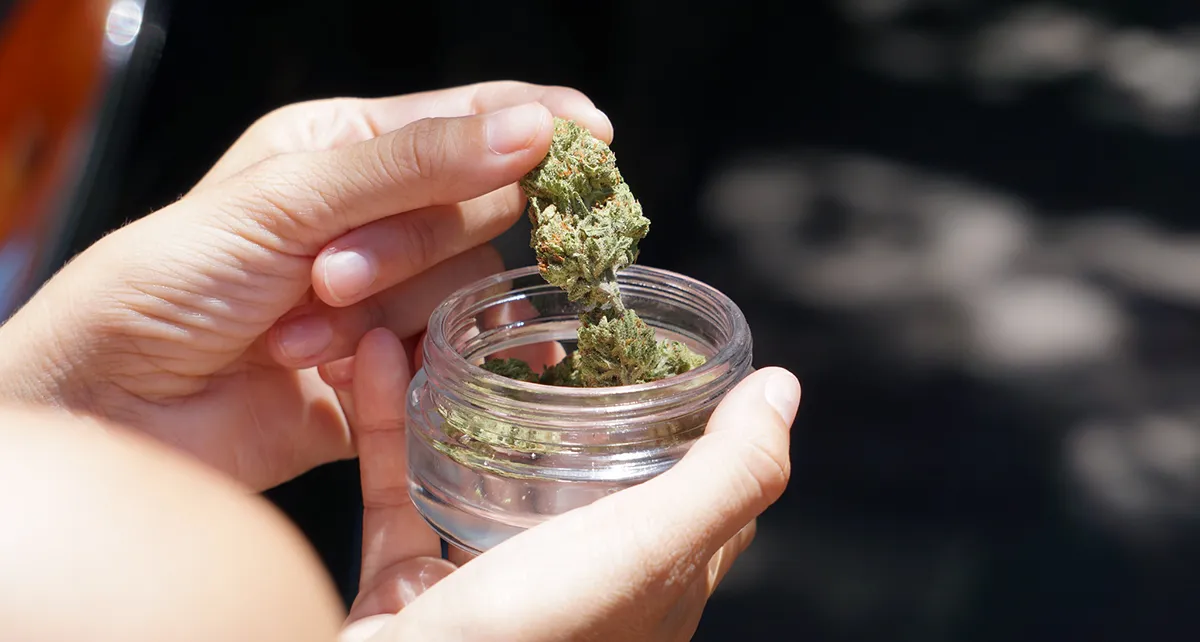
Terpenes are aromatic compounds produced by cannabis plants, and are largely responsible for the characteristic smells of different cannabis varieties, but researchers are also investigating whether they influence the effects of THC and CBD.
The main question is whether terpenes simply provide aroma and affect to the plant's biology, or whether they also alter the effects of cannabinoids in humans.
The evidence supports several conclusions: 1. Aroma: They contribute to the smell of cannabis, although other volatile compounds are also important 2. Plant protection: They help protect the plant against insects, pathogens, animals and environmental stress 3. Medical effects: Some terpenes have shown anti-inflammatory, analgesic, antimicrobial or sedative effects in experiments on cell cultures, animals and even humans 4. Effects on THC: Some experiments suggest that terpenes can modify cannabinoid-related effects, but the evidence is inconsistent 5. The entourage effect: The popular claim that terpenes reliably enhance or modify the effects of THC and CBD in humans remains unproven
there is insufficient evidence to conclude that the terpene mixtures naturally present in cannabis reliably produce particular psychological or therapeutic effects
What are terpenes, and why does cannabis produce them?
Terpenes are organic compounds produced and stored largely in the trichomes, the tiny resin-producing structures found especially in female cannabis flowers, which cannabis produces for defense and against environmental stress (like high temperatures). Unlike THC and CBD, most common cannabis terpenes (of which over 150 have been identified) are also found in many other plants, including citrus fruits, lavender, pine trees and black pepper.
Terpene
Also found in
Potential effects
Myrcene
Hops, mangoes
Analgesic, anti-inflammatory and sedative-like effects
Limonene
Citrus peel
Anxiolytic, mood-related and analgesic effects
Pinene
Pine trees, rosemary
Anti-inflammatory effects; possible influence on cognition
Linalool
Lavender, coriander
Anxiolytic, sedative and analgesic effects
Caryophyllene
Black pepper, cloves
Receptor activation, anti-inflammatory and analgesic effects
Humulene
Hops
Anti-inflammatory and analgesic effects
Terpinolene
Various herbs and conifers
Antioxidant and other biological activities
The principal cannabis terpenes and their potential effects. These effects have primarily been investigated as isolated compounds on cell cultures or animals. They should not be interpreted as established clinical effects of smoking or consuming cannabis containing these terpenes.
Can terpenes act on the human endocannabinoid system?
There is evidence that certain terpenes can interact with cannabinoid-related pathways, but the research cannot be generalized to include all terpenes and is still mostlyinconclusive and contradictory.
Is the entourage effect real?
The entourage effect is the hypothesis that the interaction of multiple cannabis compounds produces effects different from those of the individual compounds.
For example, the hypothesis suggests that a particular mixture of THC, CBD and terpenes might produce stronger pain relief, less anxiety or a different subjective high than THC alone.
Three distinctions are important:
• Additive effect: two substances produce a combined effect equal to the sum of their individual effects
• Synergistic effect: the combined effect of two or more substances is greater than the expected sum of the individual substances
• Antagonistic effect: one substance reduces the effect of another
An additive effect is not automatically evidence of synergy.
Elsa Olofsson CC BY 2.0
The recent systematic review, The Entourage Effect in Cannabis Medicinal Products: A Comprehensive Review (2024), concluded that the enhancement of cannabinoid effects by terpenes remains unproven. The evidence is strongest for the existence of effects of individual terpenes on cell cultures, weaker for effects demonstrated in animals, and weakest for reliable therapeutic effects in humans. Furthermore, it has to be noted that the dosage of terpenes used in many experiments far exceeds what a patient would be consuming when undergoing cannabis therapy.
What have controlled human experiments actually demonstrated?
Two particularly interesting clinical studies have tested individual terpenes combined with THC.
Limonene and THC effect on anxiety (2024)
A double-blind study involving 20 adults found that inhaling 15 mg of Limonene together with 30 mg of THC significantly reduced reported anxiety and paranoia compared with THC alone. Limonene did not significantly change THC blood concentrations or most other measured effects.
This provides direct human evidence that at least one terpene can modify a specific effect of THC. However, the study was small and used controlled doses that cannot automatically be generalized to ordinary cannabis products.
Pinene and THC effect on memory impairment (2025)
A double-blind study involving 19 adults tested whether Pinene could protect against memory impairment caused by THC. Participants received 30 mg THC with up to 15 mg Pinene.
The researchers found no significant reduction in memory impairment or other acute THC effects. This directly challenges the frequently repeated claim that pinene protects cannabis users against THC-induced memory problems.
Conclusion
Terpenes are active compounds with established roles in cannabis aroma and plant biology. Some have promising medical properties, and controlled research on human subjects has begun to demonstrate specific interactions with THC. However, there is insufficient evidence to conclude that the terpene mixtures naturally present in cannabis reliably produce particular psychological or therapeutic effects.
The distinction matters because claims that a cannabis variety will cause relaxation, creativity, improved concentration or pain relief because of its terpene profile currently go beyond what controlled clinical studies have established.
Deine Daten bleiben privat. Wir verwenden Cookies, um dein Erlebnis zu verbessern. Wir verfolgen dich nicht über andere Websites hinweg, geben deine medizinischen Informationen niemals an Werbetreibende weiter und verkaufen deine Daten nicht. Datenschutzerklärung